
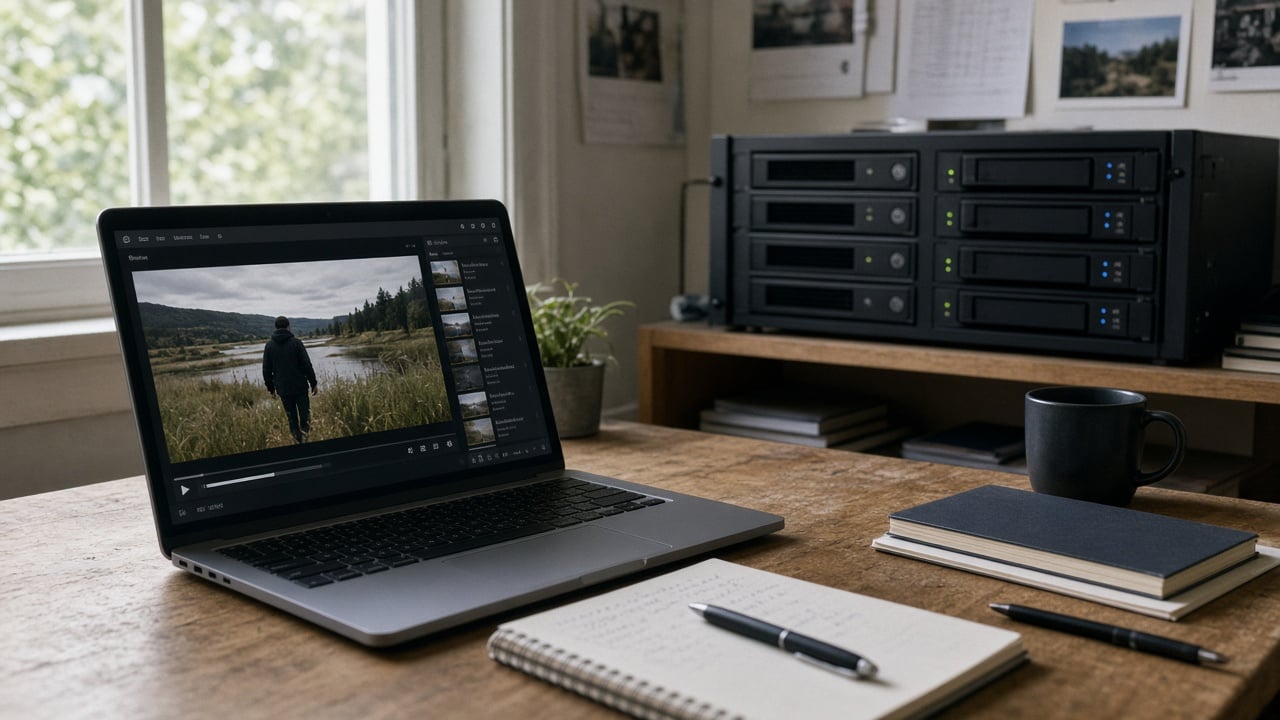
Text posts already live on the Serey blockchain. Images and videos are too large for the chain, so Serey will store them with S5 on the Sia network, and with Arweave when you choose Publish forever. You pick the option each time you publish. The goal is that no single party, Serey included, can quietly drop the only official copy.
Ownership on Serey means two concrete things. Your authorship is written on the Serey chain. Your file is named by a hash of its bytes, not by a folder on one company’s server. A licence that can be revoked, or an account that can be closed, is not enough.
Two facts sit under that claim. The record of who published what lives on the Serey chain, not only in a company database. Every media file is identified by a hash of its own bytes, so a post points at exact content, not at an address a host can swap or empty. A website can still be blocked. A file someone already downloaded cannot be pulled back. Serey does not claim every copy will last forever. It claims the official file should not live in one company account alone.
Why two systems
S5 and Arweave do different jobs. One system does not do both well.
S5 and Sia for normal publishing
S5 names the file and serves it. Sia is the storage network where the bytes can live. When you upload a file, S5 returns a CID, a hash of those exact bytes. Serey writes the CID into your post. S5 nodes keep a copy so people can watch or download it.
A stored copy is called a pin. A pin is not a password. It means a node is holding the file and can serve it. If no node still has the file and nobody saved a copy, the file cannot be played. The CID stays on the chain either way. It only proves which file was published.
Before the file is sent to Sia hosts, it is encrypted and split into thirty shards. Those shards go to thirty different hosts. Any ten shards can rebuild the file. A host cannot read the file. One host also cannot lock the file away. Twenty of the thirty hosts can go offline and the file can still be rebuilt. The renter software has to keep those contracts alive. If that software stops and is not replaced, the Sia copy can lapse.
On this path you can unpublish. Serey hides the post in the app and removes Serey’s pin. Serey cannot remove copies other people already downloaded. That is true of any public file.
Arweave for posts without a delete option
If you choose Publish forever, the same file is also written to Arweave. After the upload is confirmed, there is no monthly Arweave fee for that file. Serey has no delete function on Arweave. Arweave costs more, so it is not how Serey streams video every day. Playback still comes from S5. Arweave is the extra copy Serey cannot remove.
A country can still block a gateway. A person can still fail to find the file if they only use a blocked site. The Arweave record is separate from Serey’s servers.
How the pieces connect
The Serey blockchain holds the post: author, text, time, block number, the S5 CID, and the Arweave ID when the post is permanent. S5 stores and serves the file. Serey runs its own S5 node so the site can play media. Other nodes can hold the same CID. You can pin the file under your own S5 account.
Arweave is used only for Publish forever. The file gets an Arweave transaction ID saved on the post. If S5 is down, the app can load the file from an Arweave gateway. Readers do not handle any of this. They open a Serey page. The app uses the CID to fetch the file from a node that has it.
Serey’s own S5 node can go offline like any server. That is why a permanent post also goes to Arweave, and why an ordinary post should not depend on one machine.
 125.316 SRY