
After World War II, European governments rebuilt by tearing down barriers between themselves — cutting customs tariffs and letting goods, people, services, and capital move more freely. That project became the Single Market, and it ranks among Europe’s biggest economic achievements of the last century.
From 1993 on, a small firm in one member state could sell into another without hitting a fresh wall of paperwork and fees at every border. The size of your home country stopped defining how big your business could get. The European Commission credits the Single Market with lifting EU GDP by roughly 3–4% and adding about 3.6 million jobs. A Bertelsmann Stiftung study put the income gain near €840 ($974) per person per year.
Those gains — and the openness that produced them — took a quiet hit on August 12, 2026, through a packaging rule that looks harmless on the surface.
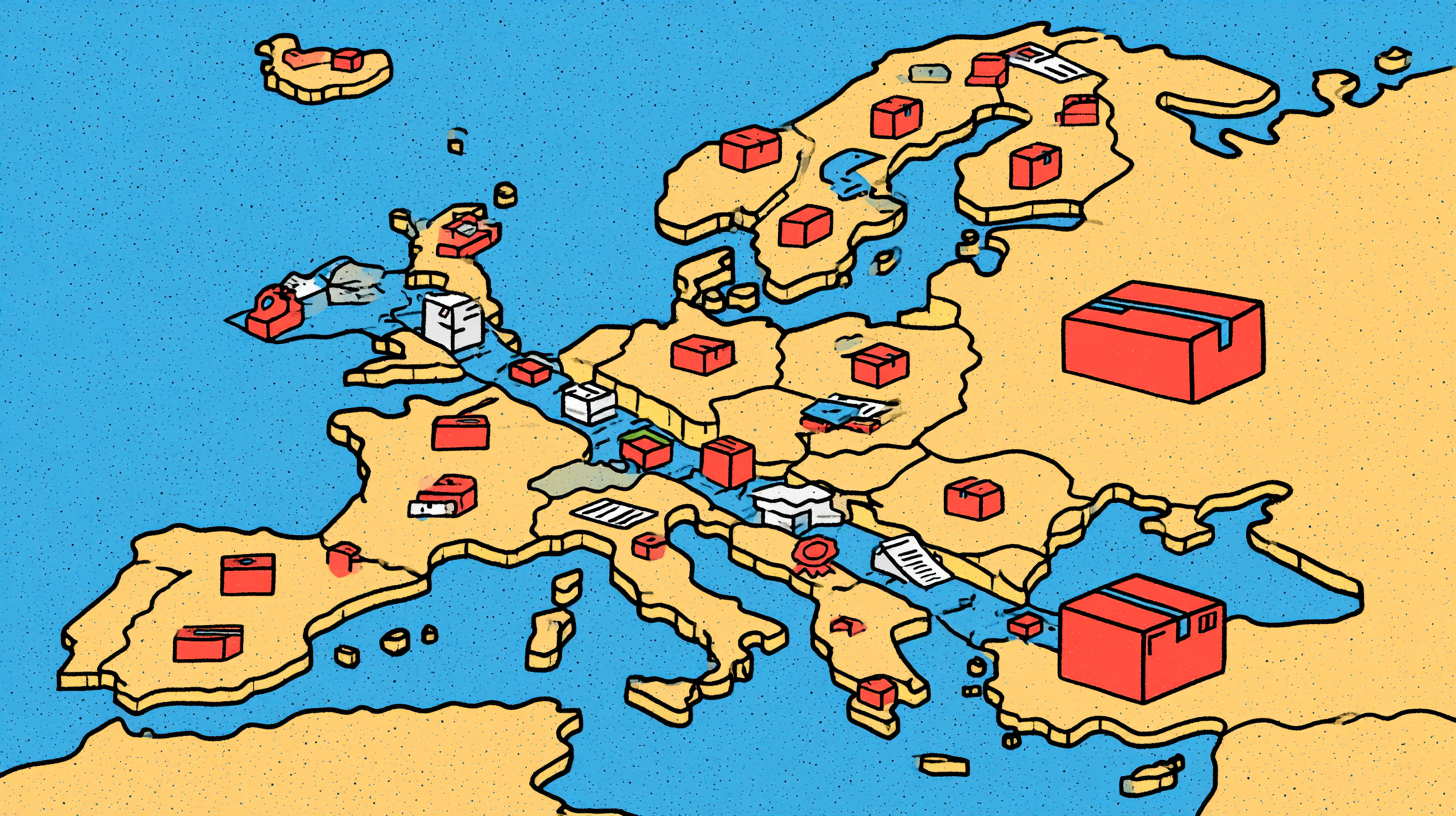
The Packaging and Packaging Waste Regulation (PPWR) piles compliance onto sellers inside and outside Europe. Big brands can absorb it. Small shops often can’t. The worst piece: if you ship packaged goods into an EU country where you aren’t established, you must name a local authorized representative. That person deals with recycling authorities, registers you in the national Extended Producer Responsibility system, files annual packaging reports, and charges roughly €200–€500 ($232–$580). One country is painful. Several countries become a fixed-cost nightmare — and PPWR doesn’t give small sellers a volume exemption.
Some firms are already pausing intra-EU shipments or killing EU shipping options. Germany’s Copiaro, for example, stopped shipping to other EU states while still serving Switzerland, Norway, and the UK — markets outside the EU rulebook. Cross-border trade for small businesses starts to look like the old patchwork of national markets again.
Sold as environmental protection, the rule can also harden concentration: the biggest packaging waste producers are often the ones best able to pay, which squeezes smaller rivals. Greener on paper can still mean poorer in practice if entrepreneurship gets choked.
Across the Atlantic, ending the U.S. de minimis exemption for low-value packages (under $800 until 2025) had a different motive — protectionism — but a familiar result. Large platforms felt it; smaller sellers and shoppers felt it more. Estimates put consumer losses in the $11–13 billion range, landing hardest on lower-income households. Different politics, same squeeze on economic freedom.
Europe is layering PPWR onto a bloc already under competitive pressure. The Single Market is still about 18% of world output, yet Europe keeps losing ground in tech and digital business under a heavy regulatory load. A decade ago more European names sat among the world’s largest listed firms; today only a handful remain near the top, and almost none of the leading startups are born inside the EU.
PPWR lands on the backbone of Europe’s economy — micro and small firms. Chasing the greenest continent title while driving founders away is a bad trade. Leading by regulation is a hollow win if it hollows out the Single Market that made European integration work in the first place.
FEE — Cláudia Ascensão Nunes
 62.994 SRY