
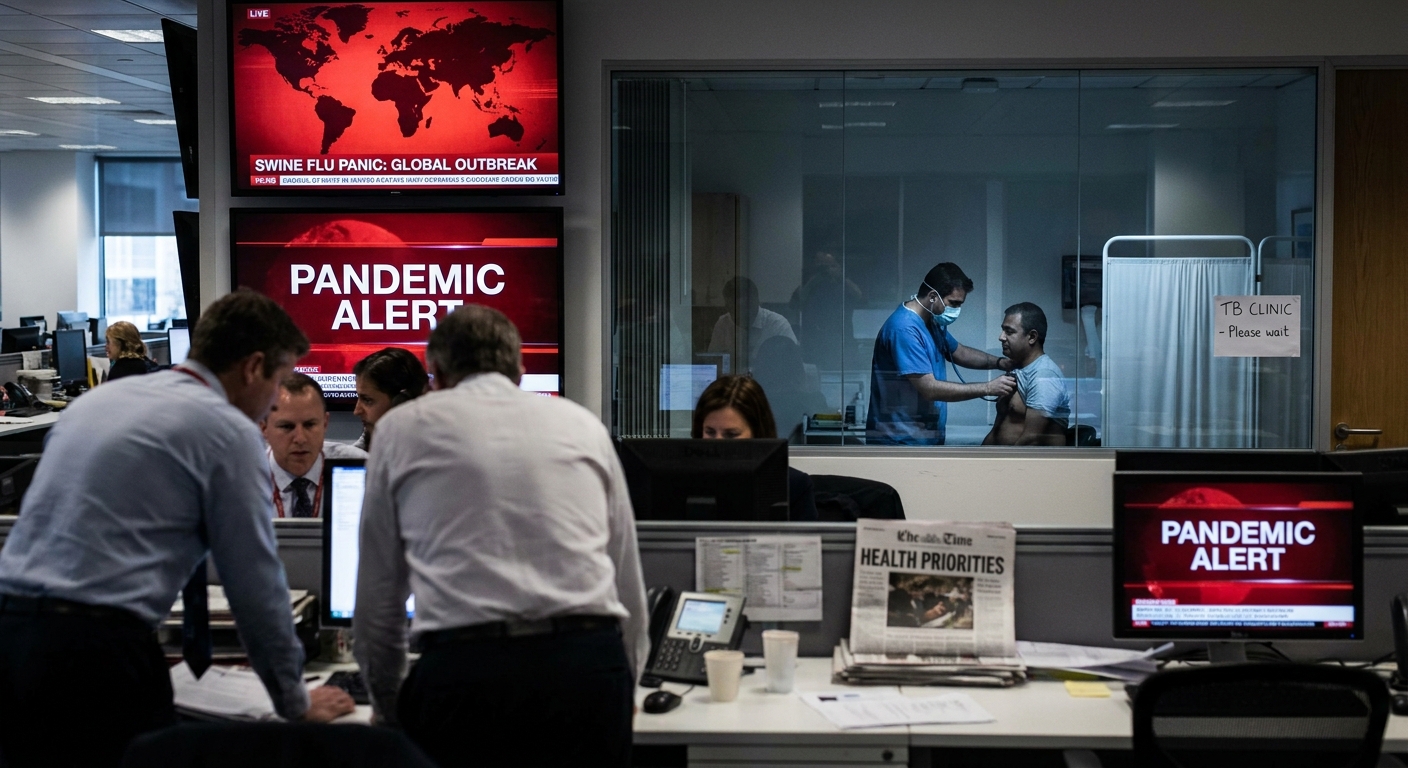
Modern media creates fear by overcovering rare diseases. In 2009, swine flu had over 8,000 news stories per death. Tuberculosis, a far bigger killer, got almost no attention. This news-to-death ratio shows how coverage ignores actual risks.
Health news often follows a peculiar pattern that has little to do with true danger. During the 2009 swine flu outbreak, expert Hans Rosling noted a striking news-to-death ratio. For each death linked to the flu, there were more than eight thousand news stories. This flood of coverage made the threat seem much larger than it was.
In sharp contrast, tuberculosis receives far less notice. It claims many more lives each year yet gets under one-tenth of a story per death. The imbalance shapes public worry and policy in ways that do not match real health needs. People end up fearing the wrong things.
Such skewed reporting continues today with other illnesses. It distracts from steady killers like heart disease and common infections. Better balance in stories could help focus efforts where they matter most and reduce needless panic.
Original Author: Carl Heneghan | Source: Brownstone Institute

Comments