
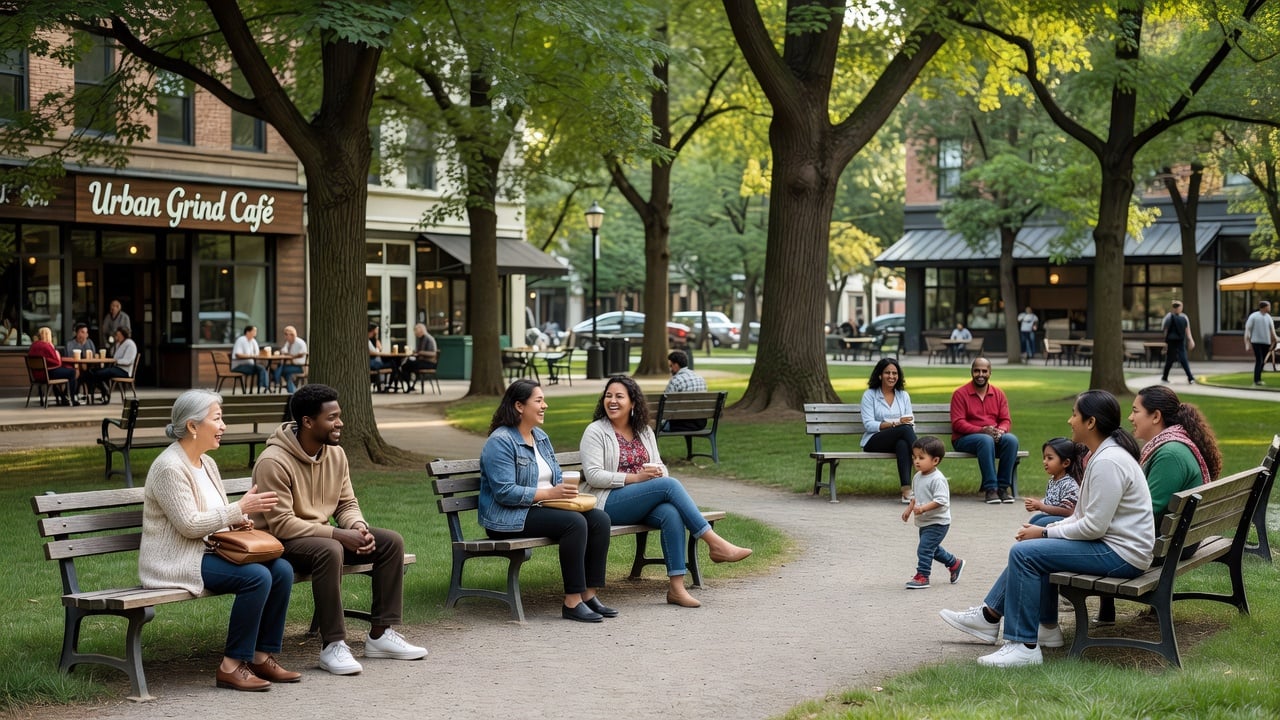
Third spaces like cafes and parks are fading from modern life, leaving many without places to connect. This quiet loss harms social bonds and neurological health. Understanding the issue helps us reclaim these vital spots for better well-being.
The concept of the third space refers to public areas outside home and work where people gather and interact freely. These spots, such as libraries, coffee shops, and community parks, once formed the backbone of social life. Yet in recent years they have quietly disappeared due to urban changes and digital shifts. Without them, individuals feel more isolated than ever before.
This disappearance goes beyond sociology and touches the brain directly. Studies link the lack of such spaces to poorer neurological health, including higher stress and reduced mental sharpness. The human mind thrives on casual encounters and community ties that these places once provided. Losing them creates a gap that affects daily mood and long-term cognitive function.
Reclaiming third spaces starts with small community efforts to restore shared areas. People can support local venues or create new gathering points in neighborhoods. By doing so, society can restore balance and support better brain health for everyone involved.
Original Author: Mollie Engelhart | Source: Brownstone Institute

Comments