
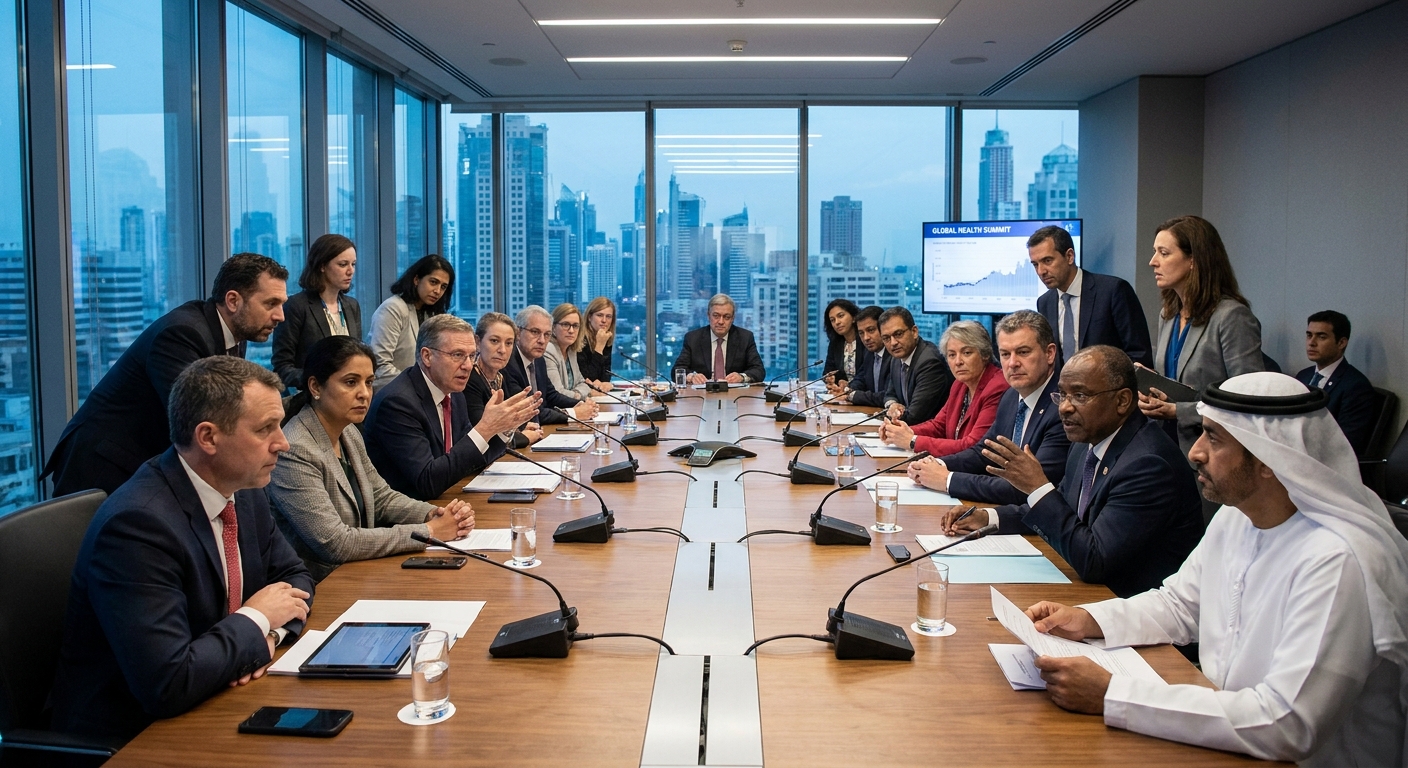
On May 25, 2025, the World Health Organization adopted the Pandemic Agreement after three years of talks. However, key issues like funding and sharing resources remain unresolved, raising questions about global health unity.
On May 25, 2025, the World Health Organization (WHO) finalized the Pandemic Agreement after three long years of discussions. This deal aims to strengthen how countries work together during health crises. Yet, the agreement isn’t fully complete. Many important decisions were delayed, leaving gaps in how the world will handle future pandemics. This has sparked concern among experts and leaders about whether nations can truly unite on health matters.
Key issues in the agreement are still up in the air. For instance, there’s no clear plan on how to fund the efforts needed for pandemics. Sharing vital resources like medical knowledge, biological samples, and manufacturing skills also remains unsettled. These unresolved points are critical because they decide how fairly and quickly countries can respond to a health emergency. Without agreement on these, some fear that poorer nations might be left behind.
The delay in finalizing these details shows a deeper divide among countries. Health is seen as a shared duty, but not everyone agrees on how to share the load. As talks continue, the world watches to see if this agreement can truly bring nations together or if differences will keep them apart. The outcome will shape how prepared we are for the next global health crisis.
Original Author: Ramesh Thakur | Source: Brownstone Institute

Comments