
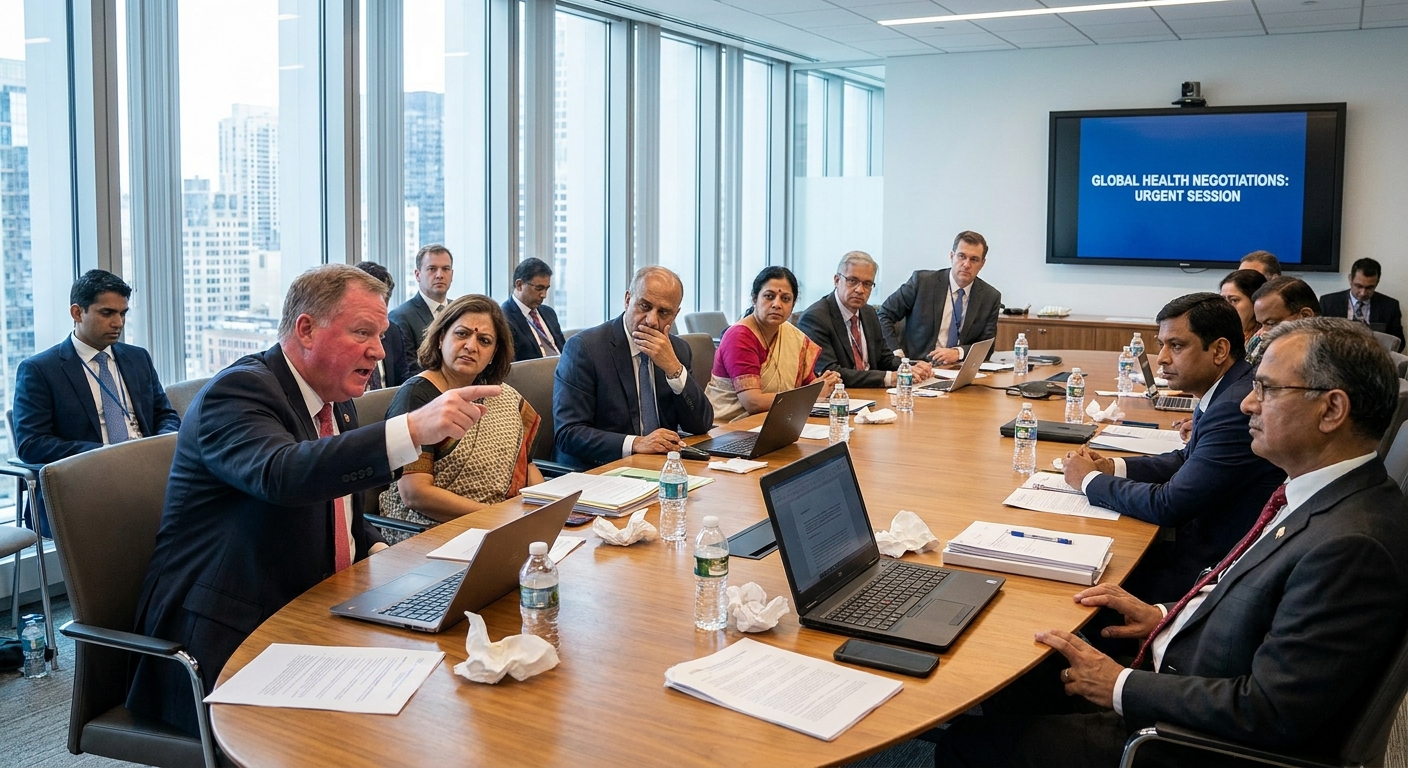
A new Pandemic Agreement was adopted on May 25, 2025, by the World Health Organization. However, key issues like funding and sharing medical resources remain unresolved, raising questions about global health control.
On May 25, 2025, the World Health Organization (WHO) finalized a Pandemic Agreement after three years of tough talks. This deal aims to set rules for handling future health crises. But the agreement is not fully complete. Many important decisions, like how to pay for it and how to share medical knowledge, were delayed. This has left many wondering if the world is truly ready for the next big health emergency.
The incomplete agreement shows deep divisions among countries. Some nations want strict rules to ensure everyone works together during a crisis. Others worry about losing control over their own health policies. Issues like sharing biological samples and manufacturing medical supplies are still hot topics. These unresolved matters could weaken global efforts to fight future pandemics.
For now, the Pandemic Agreement is just a starting point. Experts warn that without clear answers on funding and resource sharing, the world remains at risk. The hope is that further talks will bridge these gaps. Until then, the question remains: who really holds the power to protect global health? This debate will shape how nations respond to the next health crisis.
Original Author: Ramesh Thakur | Source: Brownstone Institute

Comments